
A camp from the first weeks of the regime
The Nazi regime opened the Dachau concentration camp on 22 March 1933, on the grounds of a disused gunpowder and munitions factory. The first transports of prisoners arrived on that day. The camp existed until its liberation by US troops on 29 April 1945.
Over these twelve years, more than 200,000 people from over 40 nations were imprisoned in the concentration camp and its subcamps. At least 41,500 of them died. Both figures are minimum values for the whole camp system, not exact counts for the grounds you can visit today.
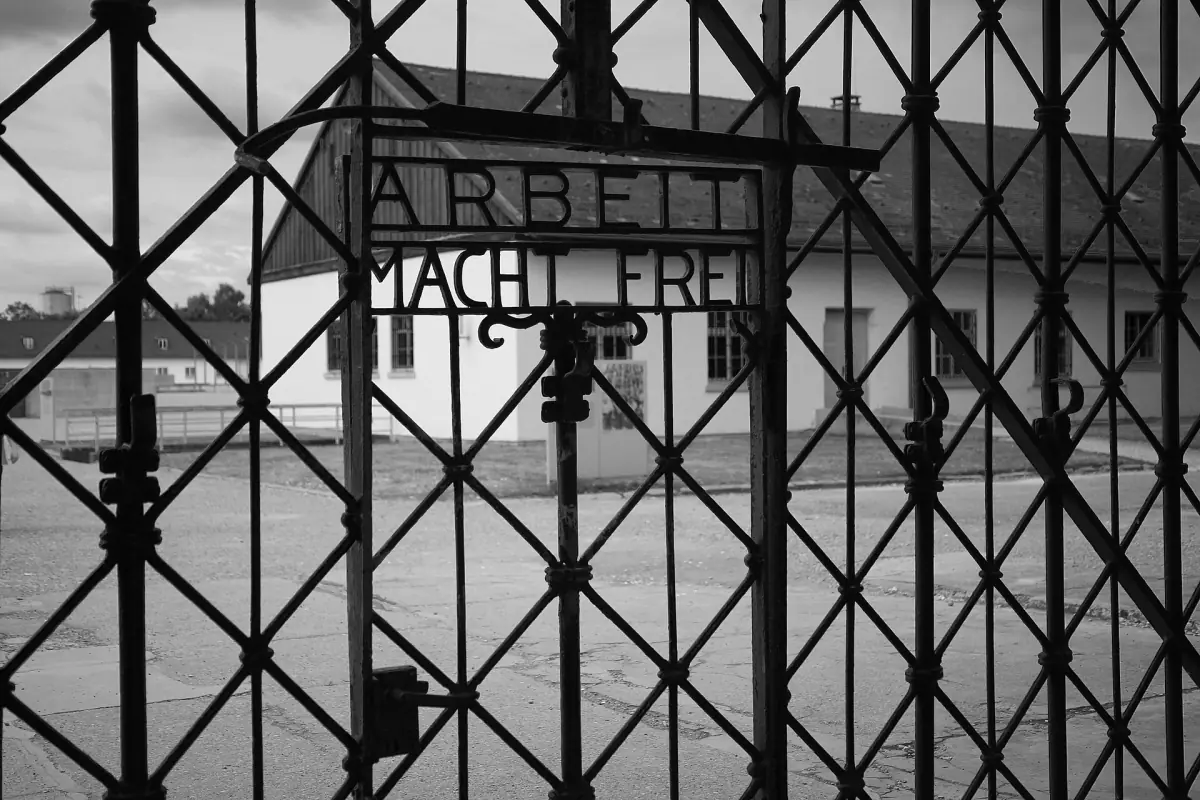
The camp from 1933 to 1945
The main stages in chronological order. Where the sources give only a month, a season or a year, no exact day is given here.
1933: the Dachau model
In October 1933, Eicke issued a set of camp regulations that turned the terror of the SS into an institution. This system became known as the Dachau model. Under Eicke, who later became inspector of the concentration camps, it was carried over to other camps.
1938: after the November pogroms
The first prisoners were political opponents of the regime. Over time, other groups were persecuted and imprisoned in Dachau. After the November pogroms of 1938, almost 11,000 Jewish men were brought to the camp.
1939 and 1940: the camp temporarily cleared
From the end of September 1939, the prisoner camp was temporarily cleared so that the SS Division Totenkopf could train there. By spring 1940, more than 5,000 prisoners had been transferred to other camps.
1940 to 1943: the crematorium area
The old crematorium was built in summer 1940. Construction of Barrack X began in spring 1942, and it went into operation one year later. It was equipped with four cremation furnaces, disinfection chambers and a gas chamber disguised as a shower room.
From 1942: medical crimes
From 1942, SS doctors carried out experiments on human beings in the camp. These included high altitude and low pressure experiments, hypothermia and cold experiments, malaria experiments and the testing of medication.
29 April 1945: liberation
US troops liberated the camp on 29 April 1945. The last weeks before, the death marches and the days after are described on the liberation of Dachau page.
Who was imprisoned in Dachau
At first the camp held political opponents of the Nazi regime. Later the SS imprisoned Jews, Sinti and Roma, homosexual men and people whom the regime persecuted under the categories of the time as “asocial” or “criminal”. These labels were instruments of persecution. They describe how the regime classified people, not who these people were.
The prisoners came from over 40 nations. According to the Bavarian Memorials Foundation, which runs the memorial site, the camp system included 140 subcamps. The figures of more than 200,000 prisoners and at least 41,500 dead refer to the main camp and these subcamps together. The sources of the memorial site and the foundation describe the number of dead as “at least”, “about” or “more than” 41,500. There is no exact final count.
The crematorium area and the gas chamber
In the crematorium area, prisoners were murdered by hanging and by shots to the back of the neck. Barrack X contained a gas chamber disguised as a shower room.
According to the memorial site, there were no mass killings with poison gas in the Dachau concentration camp. Why the functional gas chamber was not used in this way remains unclear. One eyewitness account describes the killing of several prisoners with poison gas in 1944.
This must be kept apart from another crime. Sick prisoners and prisoners no longer able to work were deported from Dachau to the Hartheim Castle killing center and murdered there with poison gas. The memorial site describes these transports in its chronology for 1942. They are not the same as the use of the gas chamber in Dachau.
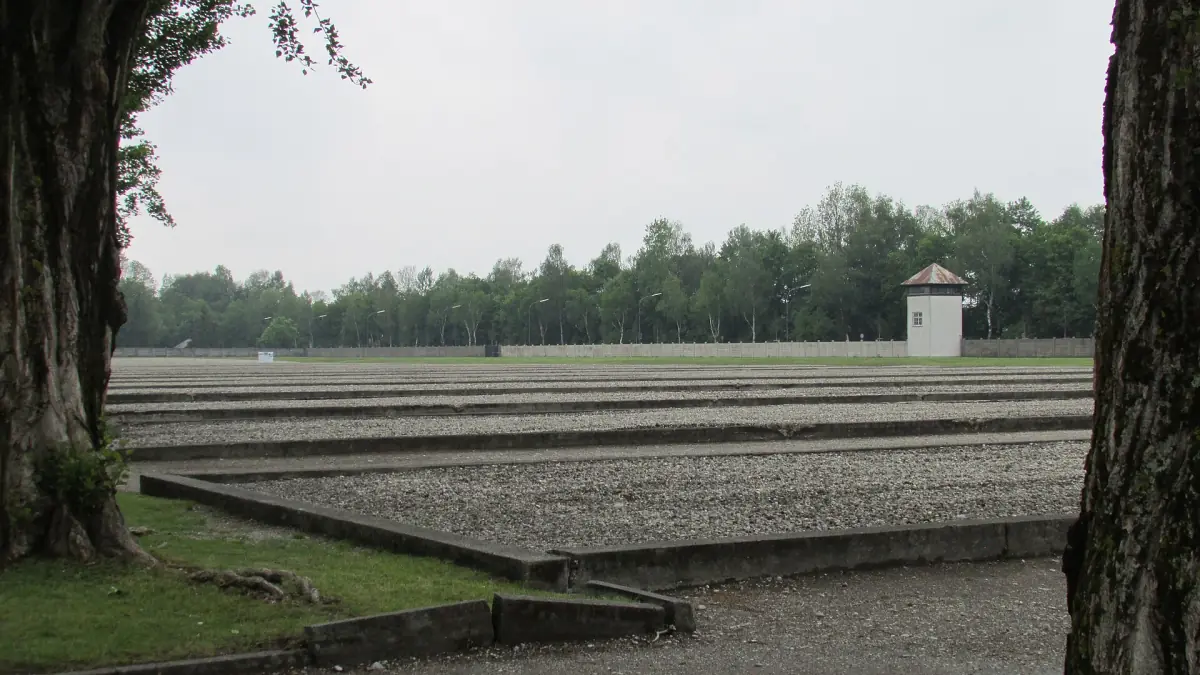
After 1945: from camp to memorial site
From April to June 1945, former prisoners were cared for on the site while they waited to be repatriated. From July 1945 until summer 1948, the United States used the camp to intern Nazi Party officials and members of the SS. In 1948, the former prisoner camp was handed over to Bavaria. It became a camp for expellees and later the Dachau East housing settlement.
The religious memorials followed. The Catholic Mortal Agony of Christ Chapel was consecrated on 5 August 1960 and the Carmel of the Holy Blood on 22 November 1964. On the initiative of survivors, the memorial site opened on 9 May 1965 with a documentary exhibition. The Protestant Church of Reconciliation was consecrated on 30 April 1967 and the Jewish Memorial on 7 May 1967. The International Memorial by Nandor Glid was dedicated on 8 September 1968, and the Russian Orthodox Chapel on 29 April 1995.
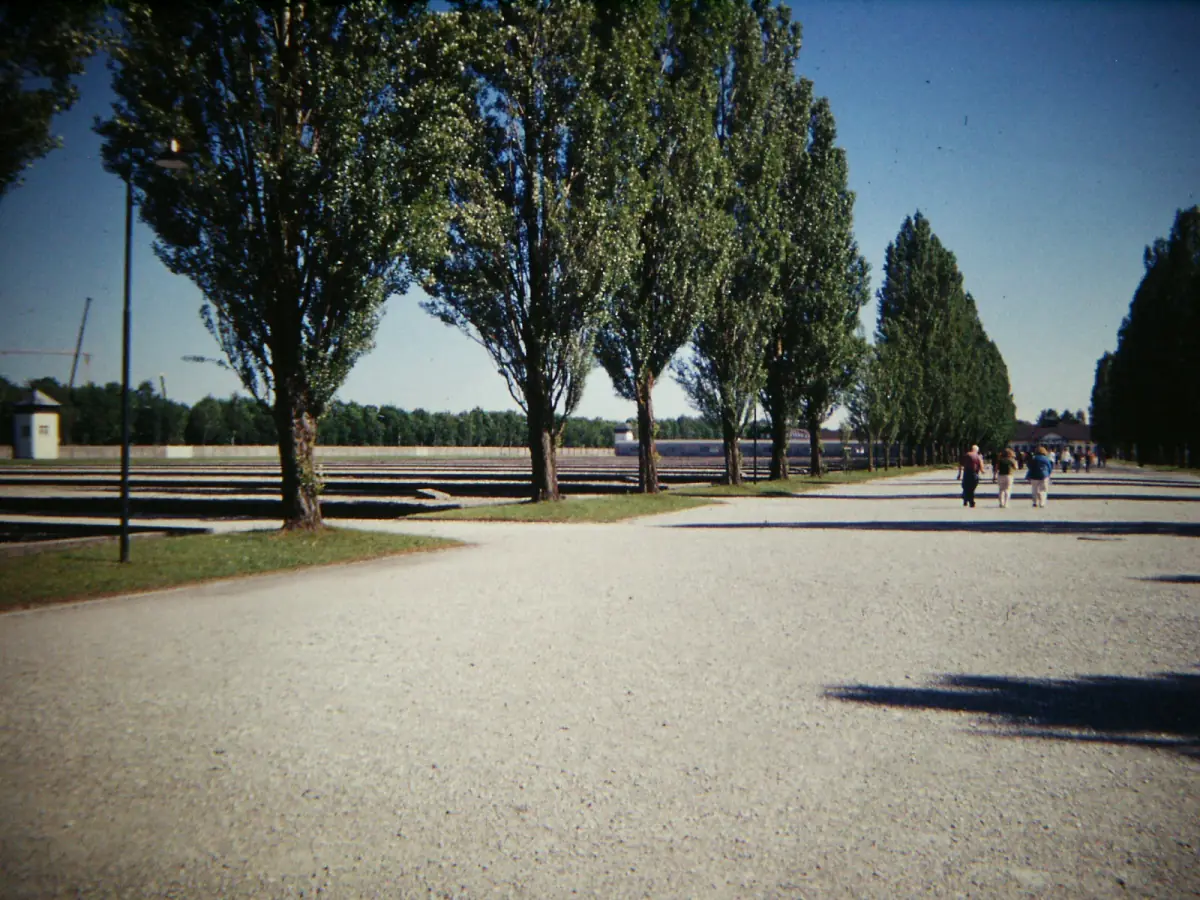
The current main exhibition opened on 2 May 2003 and the visitor center on 29 April 2009. Since 2003, the memorial site has been run by the Bavarian Memorials Foundation. The barracks you see today are reconstructions, not original prisoner quarters that have survived unchanged.
Where this history is documented on site
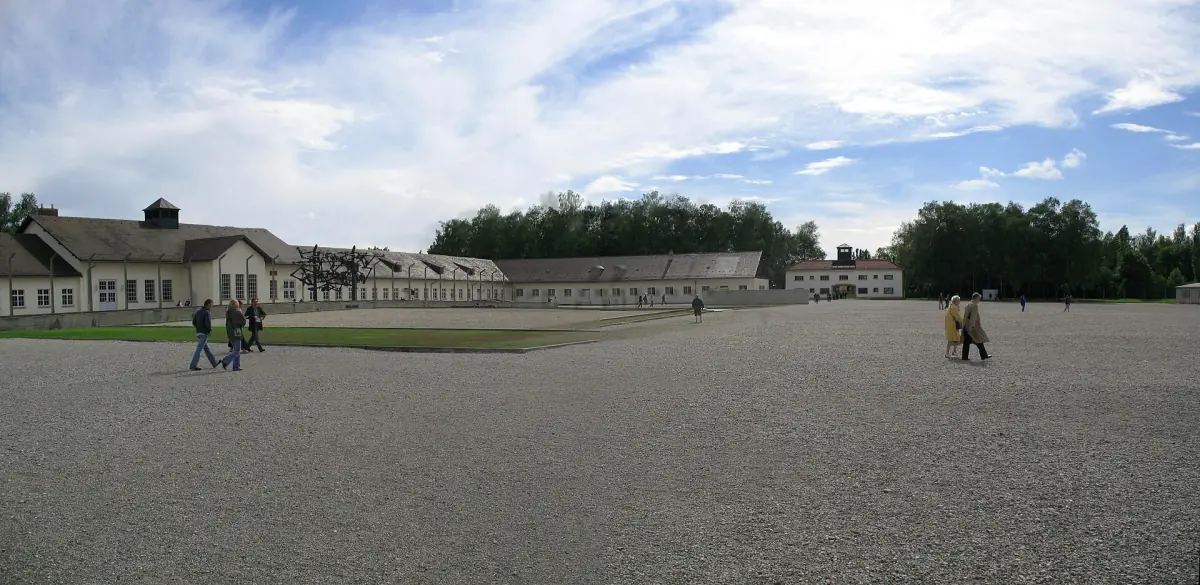
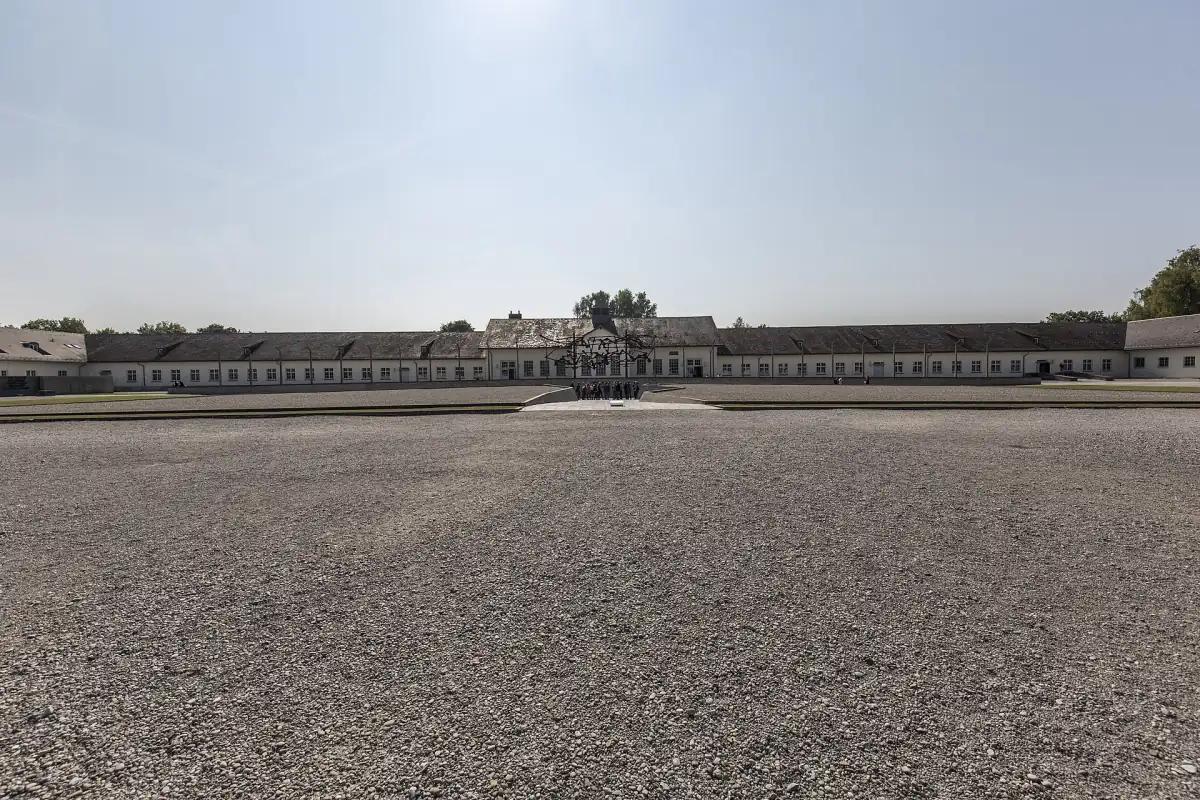
The main exhibition is housed in the former maintenance building. It follows the path of the prisoners through the camp. Further exhibitions are found in the former camp prison, in the reconstructed barrack and at the former crematorium. Exhibition texts and the information outdoors are in German and English.
The memorial site gives half a day as the typical time needed for the grounds and the exhibitions. Opening hours, admission and the rules on site are covered on the visiting the memorial site page. The options for a visit with a licensed guide are explained on the guided visits page.
A guided visit to the memorial site
If you would like to see the places described here with a guide. Only guides licensed by the memorial site may lead tours on the grounds.
Hand-picked tours, booked through Viator. Prices are indicative starting prices in euros (as of October 2026). Tap a tour for live availability and the current price in your currency.
A guided visit to the memorial site
A guided visit to the memorial site from Munich. Only guides licensed by the memorial site may lead tours on the grounds.
History of Dachau: frequently asked questions
When was Dachau concentration camp opened?
The Nazi regime opened the camp on 22 March 1933, the day the first transports of prisoners arrived. US troops liberated it on 29 April 1945.
How many people were imprisoned in Dachau, and how many died?
More than 200,000 people from over 40 nations were imprisoned in the concentration camp and its subcamps. At least 41,500 died. These are minimum figures for the whole camp system, not an exact count.
Was there a gas chamber in Dachau?
Yes. Barrack X, built from spring 1942 and in operation one year later, contained a gas chamber disguised as a shower room. According to the memorial site, there were no mass killings with poison gas in Dachau, and why the functional chamber was not used in this way remains unclear. One eyewitness account describes the killing of several prisoners with poison gas in 1944.
Are the barracks on the site original?
No. The barracks visible today are reconstructions.
Can children visit the memorial site?
The memorial site advises against a visit for children under 13 in its FAQ, while its visitor regulations name children under 12. Minors should come with a parent or guardian. Educational programs are offered from age 13.
When is the memorial site open?
The visitor center, grounds and exhibitions are open daily from 9 am to 5 pm and closed on 24 December. Admission is free. Last entry to the former crematorium area is at 4:30 pm. Check the current details of the memorial site before your visit.